

Connect & Transform
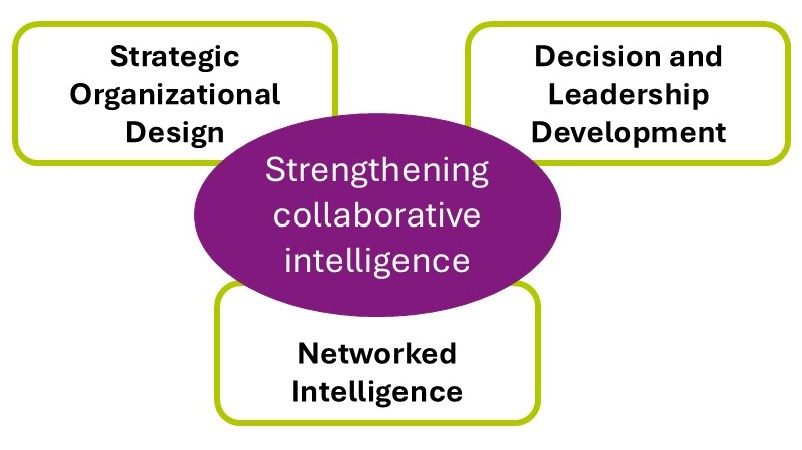
Connect & Transform focuses on
- Strategic Organizational Design: Shaping organizational structures, strategies, and operating models for optimal performance.
- Decision and Leadership Development: Optimizing decision-making processes, coordination, and developing leadership capabilities.
- Networked Intelligence: Fostering multi-layered collaboration and building powerful alliances with diverse stakeholders.
We are firmly committed to
- Long-Term Value Creation and Resilience: We drive profitable growth that contributes to ecological and social well-being, enhancing long-term resilience.
- Operational Excellence and Adaptability: Streamlining processes and enhancing responsiveness to market changes through aligned operating models.
- Empowered Ownership and Development: Designing environments that cultivate ownership and facilitate continuous growth.
Our interventions are based on
- Proven Expertise: Leveraging a long history of successful interventions across diverse sectors and growth phases.
- Systems Thinking and Humane Principles: We employ a holistic approach based on systems thinking and humane principles to understand and address complex sustainability challenges.
- Iterative and Adaptive Design: Employing a collaborative and iterative approach to ensure continuous improvement and responsiveness to technological advancements.
Programs & Perspective-Shifting Dialogues
Dynamic Collaboration – Executive Program in Transformation Capabilities
Build the organizational capacity to sense change, make choices, and turn strategy into action
Strategies rarely fail because organizations lack ambition. They fail because the organization is insufficiently able to sense change early, make sense of what it means, make clear choices, and then reconfigure itself accordingly.
That capability is becoming increasingly important. Technology, AI, changing customer expectations, scarce expertise, emerging ecosystems and societal transitions are changing not only what organizations do. They are also changing how decisions need to be made, where responsibility belongs, and how people need to collaborate across functions, teams, and organizational boundaries.
Dynamic Collaboration is an advanced executive program for CEOs, senior leaders, transformation leaders and experienced change practitioners who want to deliberately strengthen that adaptive capacity.
The program builds on the Dynamic Capabilities logic of sensing, seizing and transforming and translates it into the everyday realities of leadership, organizational design and collaboration. It directly reflects the Connect & Transform approach: making visible where strategy and collaboration become blocked, making better governance and design choices, and embedding those choices in roles, decision-making, leadership and cross-boundary collaboration.
The central question is no longer simply: do we have the right strategy?
The more difficult questions are: Do we see early enough what is changing around us? Can we connect different signals into a richer picture? Can we translate those insights into real strategic choices? Is our organization designed to act on those choices? Can teams deal productively with uncertainty, interdependence, and tension? And can we continue to renew ourselves without requiring another major reorganization every few years?
Dynamic Collaboration develops precisely that capacity.
The four modules form one coherent developmental journey: from seeing differently, to organizing differently, working differently, and ultimately creating value differently.
From insight to organizational capability
In Module 1, participants strengthen their sensing & sensemaking capability: they learn to read complex situations more systemically and to recognize patterns, tensions, interdependencies and emerging developments that conventional analytical frameworks often leave out of view.
In Module 2, the focus shifts toward seizing: how do you translate strategic choices into an organization in which contributions, responsibilities, decision space, and coordination are designed so that people can genuinely act?
In Module 3, transforming becomes central. Not through more meetings, but by increasing the quality of collective thinking and action. Teams learn to connect different perspectives productively, engage in better dialogue, experiment, learn, and embed new ways of working.
Module 4 extends this capability to the organization and the ecosystem in which it operates. The focus shifts from adaptation to regeneration: how do you build organizations that can continuously create new value for the enterprise, people, society and the wider living system?
The result is not a collection of models, but a stronger strategic organizational capability: to make sense of change more rapidly, make better choices, locate responsibility closer to the work, organize interdependencies more effectively, mobilize collective intelligence and embed new practices structurally.
Dynamic Collaboration does not primarily help leaders manage change better. It helps them build an organization that is better able to change.
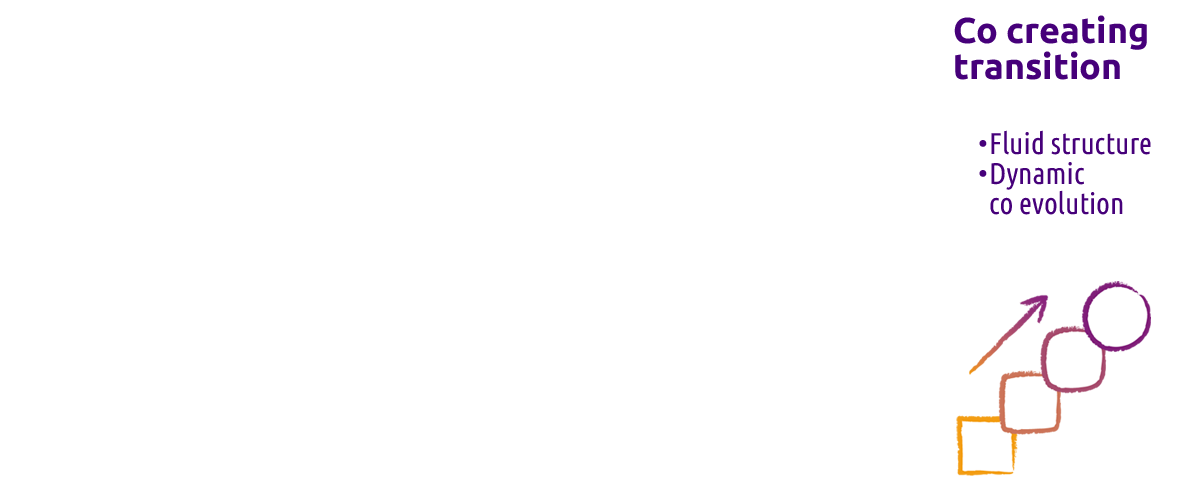
Co creating transition
Connect & Transform co-creates the desired transition by
- Structured Transition Through Enhanced Coordination: We design and implement optimized work structures to facilitate smooth and effective transitions.
- Dialogue-Driven Transformation: We create and cultivate interconnected spaces for dialogue, focusing on improving meeting practices, developing shared perspectives, achieving coherent action, fostering autonomy and ownership, and enabling continuous development.
- Strategic Emergence and Reinforcement: We identify and map zones of proximal development, leverage positively reinforcing dynamics, and embed emerging best practices.
We focus on
- Accelerated and Aligned Transition Processes: We deliver transitions that are efficient and profoundly aligned with organizational goals.
- Sustainable and Evolving Practices: We embed emerging practices, ensuring that transitions lead to lasting improvements and ongoing development.
Strengthening strategy execution
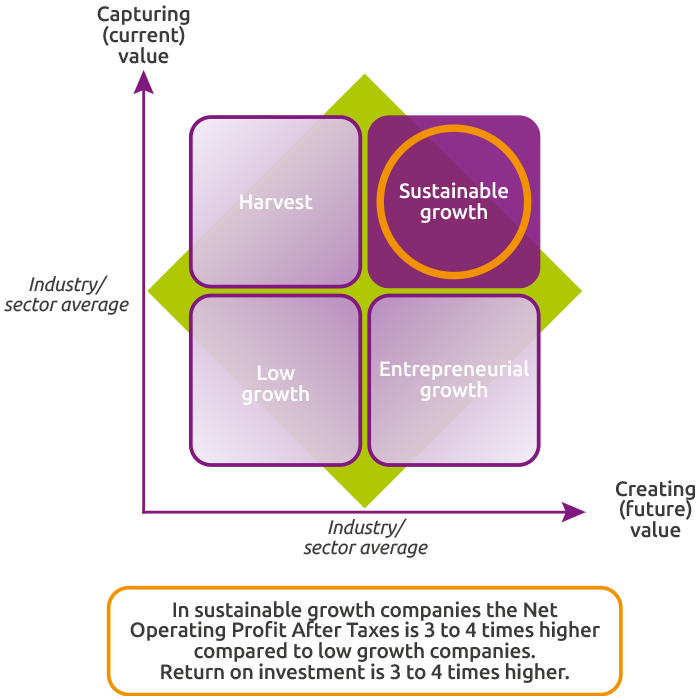
Connect & Transform supports boards of directors in assessing the quality of strategy execution.
Through a Strategy Implementation Audit, we provide actionable insights into the capabilities of steering teams to achieve strategic objectives.
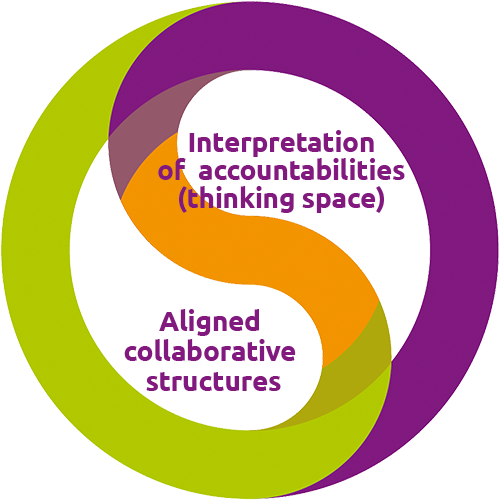
Our methodology considers environmental, organizational, and human capital factors and focuses on
- How leaders interpret environmental developments and translate their insights into the business and operational models.
- The projected evolution of accountabilities.
- Adapting human capital practices to realize the desired economic growth.
We align strategy execution with proven patterns observed in sustainably growing companies.
Aligned Collaboration
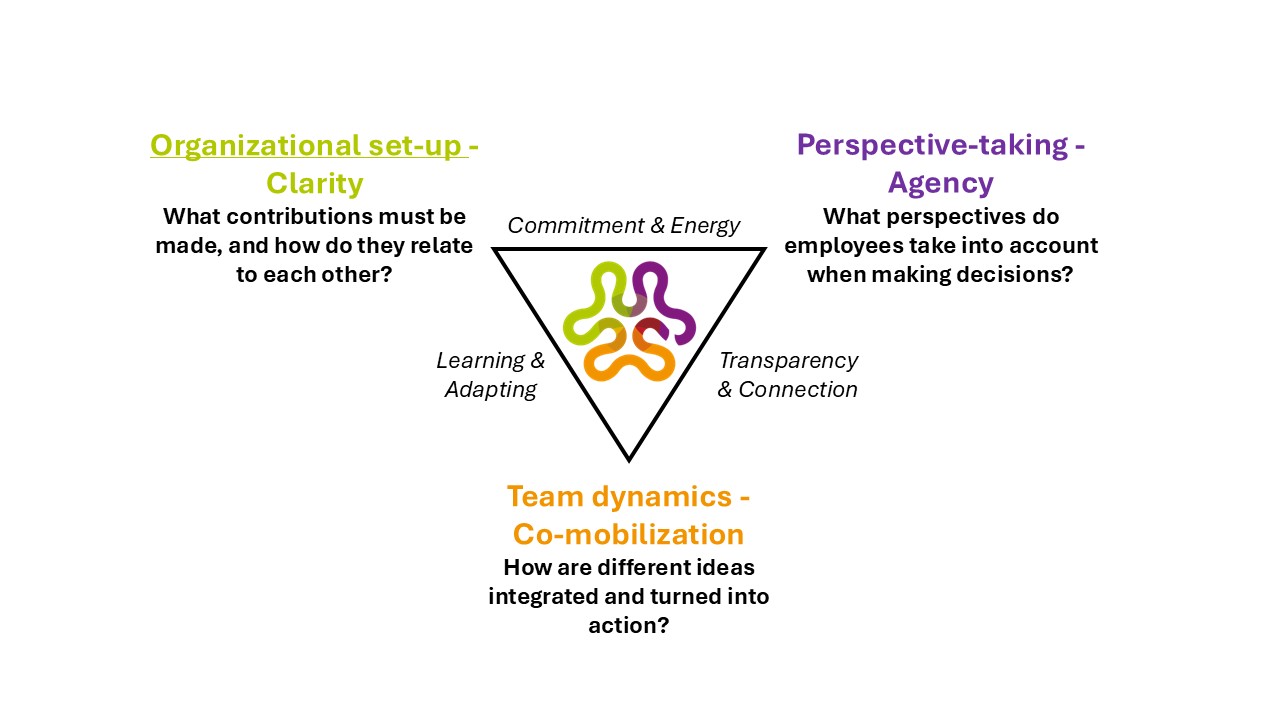
The Dynamic Collaboration approach addresses widespread disengagement and team inefficiency by providing data-driven tools for targeted interventions. It fosters a more aligned and mutually strengthening work environment by:
- Measuring and visualizing collaboration quality: Analyzing organizational setup, individual decision-making, and idea integration.
- Clarifying roles and responsibilities: Enhancing accountability and streamlining teamwork.
- Mapping employee development and idea contribution: Optimizing individual and collective potential.
The methodology delivers actionable insights to improve value creation, transforming disengaged workforces into high-performing, aligned teams.
Publications and Thought Leadership
Jan De Visch, Managing Director of Connect & Transform and Executive Professor at Flanders Business School (KU Leuven), translates academic rigor into practical solutions for complex organizational issues.
Through his articles and book publications, he bridges the gap between theory and practice, showcasing how complexity-informed interventions, coupled with insights into human evolution, can drive tangible results and empower organizations to thrive in dynamic environments.
Below is a short synthesis of the publications that can be ordered. Click on the covers for more background information.

Follow Jan De Visch on LinkedIn and be inspired by his regular, inspiring posts.
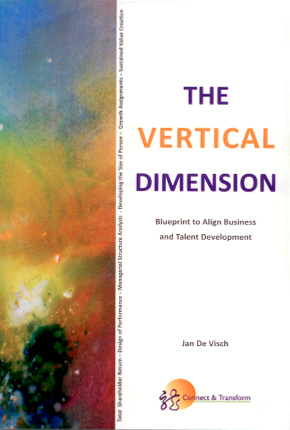
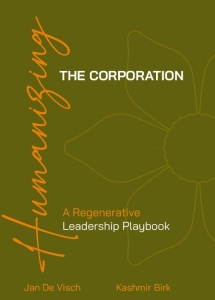
This book presents a “Levels of Accountability” framework, progressing from fundamental operational tasks to deep societal engagement and a unified human vision. Achieving mastery across these levels enables organizations to effectively synchronize daily operations with strategic alliances, ultimately transforming collaboration from a discretionary skill to a critical strategic imperative.
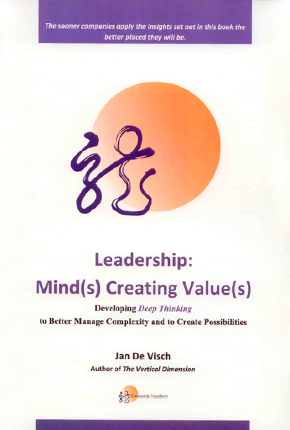
This book explores the power of deep, meta-level thinking to navigate complexity and generate new possibilities. It demonstrates how leaders, by conceptualizing situations beyond surface-level narratives, actively shape reality. This process involves creating new meaning, defining boundaries of relevance, and ultimately improving decision-making quality. The book reveals that even in facilitation, leaders are influential architects of shared realities.
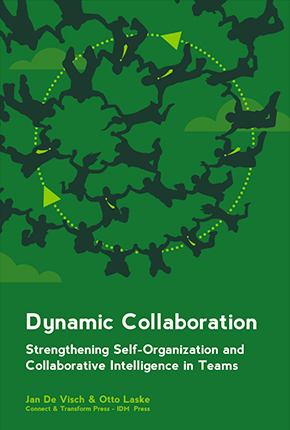
This book provides a comprehensive, evidence-based tools and procedures that help making the leap to self organizing teams, creating real collaborative intelligence by significantly increasing the quality of dialogue and decision making.
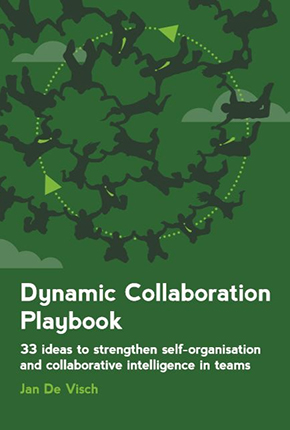
This is a hands-on, state-of-the-art collection of highly practical, complementary tools for collaborative intelligence and self-management.
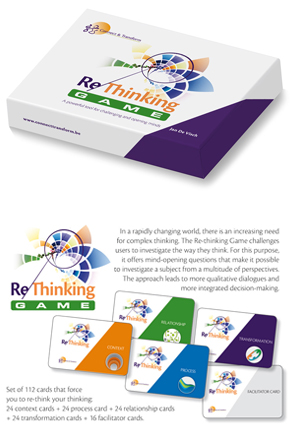
A toolkit for better decision making by looking at problems and challenges in a more holistic and integrative way.
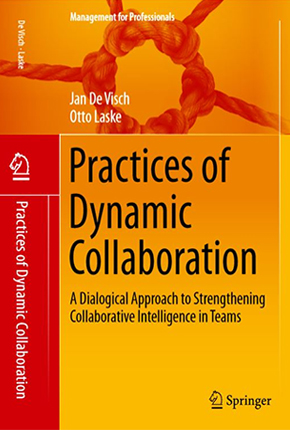
This book provides managers and team leaders with tools for boosting the quality of team dialogue for the sake of strengthening role ownership and creating collaborative intelligence throughout an organization.
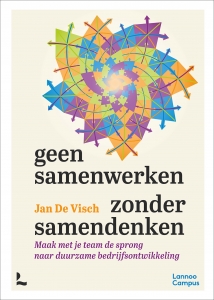
Geen samenwerken zonder samendenken laat je op een andere manier kijken naar betrokkenheid van medewerkers, het bereiken van flow in project- en programmawerking, en de effectieve vertaling van strategie naar operationele excellentie. Het verandert je gezichtspunt rond het samenwerken in teams.
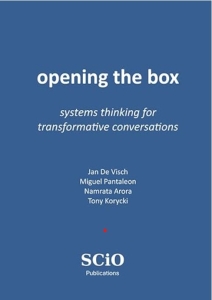
This book uses dialogue to introduce systems thinking. It explores four layers to understand complex situations beyond surface-level narratives. It teaches how to see interconnectedness and move beyond mechanistic and short-term thinking. It serves as background material for senior leadership development programs.
Our clients
They share the search to better respond to the rapid changes in their environment.
Contact us
Automatic form
Connect & Transform
Koningin Astridlaan 144
2800 Mechelen
Tel +32 478 31 24 24
jan@connecttransform.be